
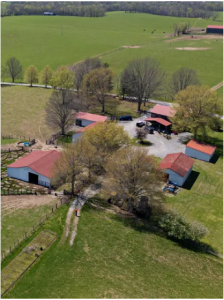
Credit : Glenn Hartong
Would You Turn Down $26 Million to Save the Family Farm?
World Nature Conservation Day was yesterday, July 28. Earlier this month, People.com (the online edition of People magazine) published details of a family that turned down $26 million from an unnamed Fortune 100 company for half of the family’s 1,200-acre farm in northeast Kentucky, just south of Ohio. The exclusive article by KC Baker and Susan Young is titled, After Refusing $26M to Turn Farm Into AI Data Center, Mom and Daughter Join Fight Against Mysterious Fortune 100 Company. The farm has been in the Huddleston family for over 200 years. The buyer, whose identity was kept a secret by County officials, was attempting to acquire parcels for a proposed 2,000-acre data center. Initially, the family accepted the offer to buy, but withdrew their acceptance. The family felt like there was too much of their family history in the farm, which grew wheat for breadlines during the Great Depression.
Preserving your family’s land for future generations with a conservation easement
For land-rich families struggling to keep their farms profitable, this is a hard conversation. This is especially true if the land-rich families are also cash poor. On one hand, they want to continue their family tradition and save the land that is their family’s legacy. On the other hand, an offer like the one in the article is tempting. Some sellers believe that it is better to partner with data centers and negotiate agreements for water protection, pollution mitigation, and buyer payments earmarked for environmental efforts.
What to do with family land is an important conversation to have, especially as part of succession planning: your heirs may not share your vision for the land. If you would like to preserve your farm for future generations, you can ensure the farm is protected by placing a conservation easement on it.
What is a conservation easement?
A conservation easement is an interest in real property – called a servitude – that is conveyed by a landowner to a holder of the easement. The property interest is recorded in a legal instrument, called a deed (usually called a deed of conservation easement). The deed is recorded in the land records for the county. The deed restricts uses for the property, and its terms are legally enforceable. The restrictions in the deed bind the landowner, and also future owners of the property (referred to as “successors”).
Are there tax benefits associated with a conservation easement?
Federal tax law permits an income tax deduction (or, if the easement is donated upon death, an estate tax deduction) that is based on the fair market value of the conservation easement when it is donated. There are tax rules about how that amount is determined, and there are legal requirements that must be satisfied. Generally, the conservation easement must protect the land for the education or recreation of the general public, protect open space (which can include working farms) for scenic enjoyment or pursuant to a governmental policy, protect a natural habitat, or preserve a historic structure. Some states also offer state tax credits.
# # #
If you are thinking about donating a conservation easement and would like to consult with experienced tax attorneys who specialize in conservation easement deductions, contact the attorneys at K. Tyson Law.
July 29, 2026. Written by Kim Tyson, J.D., LL.M. and Karin Gross, J.D., LL.M. Kim and Karin are both tax attorneys who spent decades working at the IRS and have worked extensively advising on the tax aspects of conservation easements. If you have questions about the tax requirements for conservation easements, please contact K. Tyson Law.
Read our related blog posts: